Key takeaways:
- Greenhouse-grown produce is outpacing field-grown alternatives across tomatoes, cucumbers, peppers and packaged salads year over year (NielsenIQ and Cox Farms).
- Retailers with more indoor-grown products in their packaged salad assortments generally performed better before the 2026 cyclosporiasis outbreak and experienced smaller declines afterward (NielsenIQ and Cox Farms).
- When it comes to shopper awareness, there’s room for growth. Only 59% of consumers reported familiarity with greenhouse-grown produce, compared with 98% of industry respondents (Morning Consult).
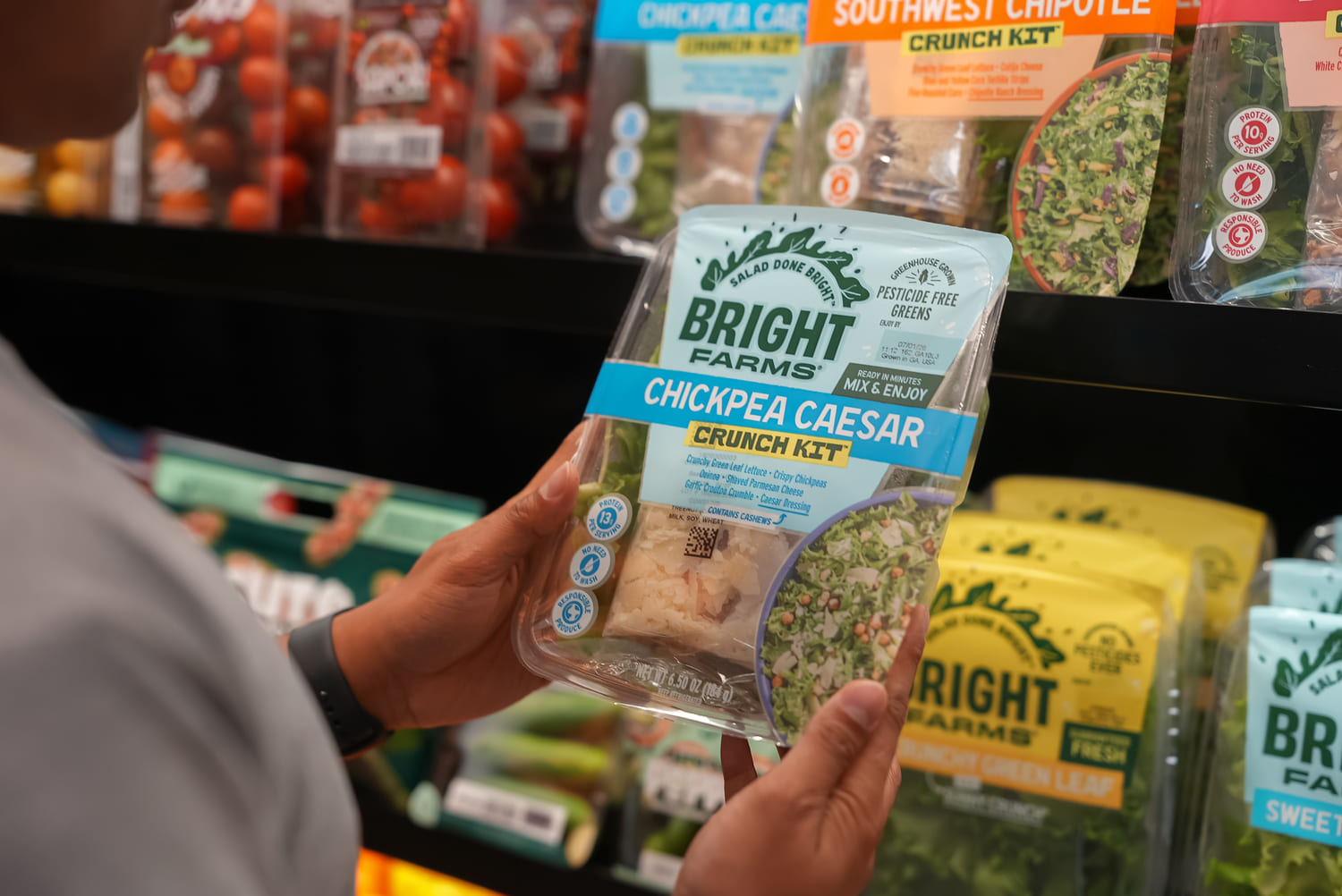
Greenhouse agriculture has grown significantly during the past several years. Conditions were already ripe for the category’s continued expansion, and the 2026 cyclosporiasis outbreak put growing practices front and center for many consumers for the first time.
The industry now has an opportunity to build on that cultural shift by highlighting the benefits of greenhouse-grown produce.
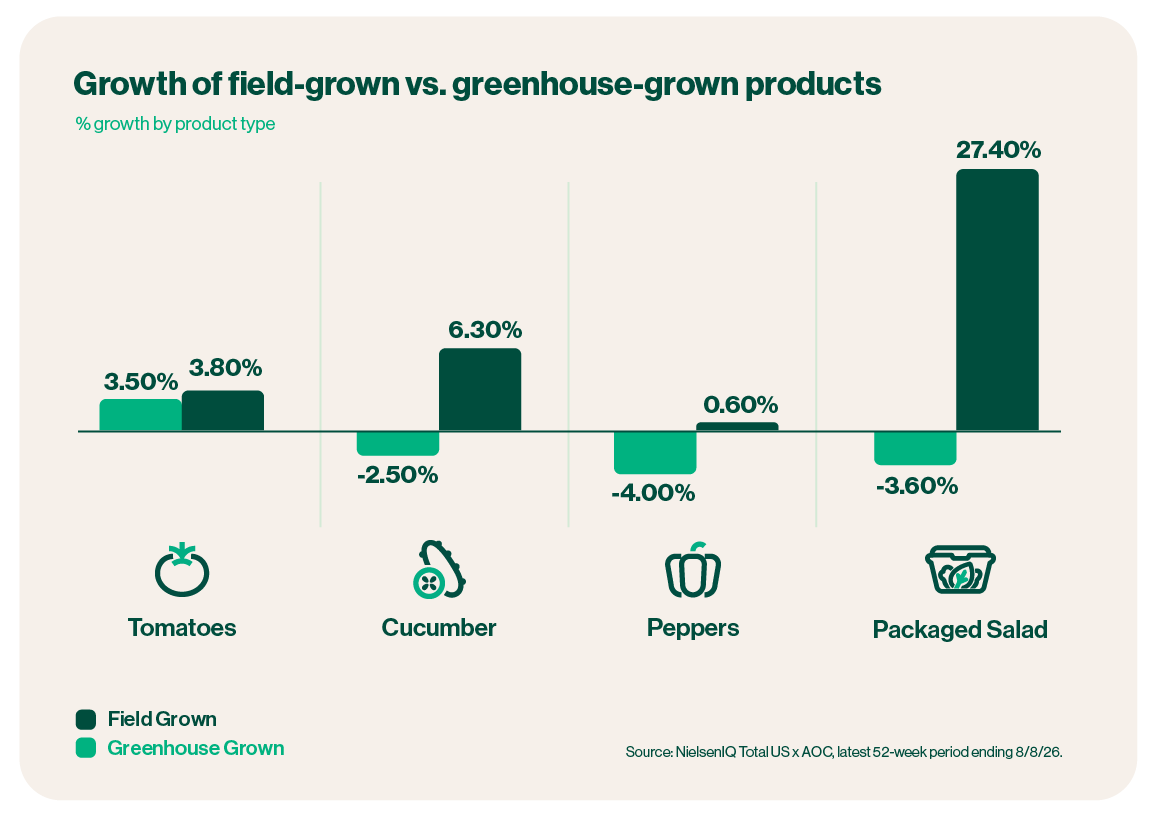
Recent industry data from NielsenIQ shows greenhouse-grown products are driving much of fresh produce’s momentum, outperforming field-grown alternatives across key produce categories, including tomatoes, cucumbers, peppers and packaged salads. That growth comes at a time when overall produce category growth has remained relatively modest.
In packaged salads specifically, greenhouse products grew by 27.4% year over year while field-grown products declined. NielsenIQ data from August 2025 to August 2026 shows that greenhouse products accounted for approximately 8.7% of packaged salad sales while delivering all the category growth.
Production of vine crops, such as tomatoes, peppers and cucumbers for retail grocery stores, has already shifted largely to high-tech hydroponic greenhouses, according to information from the Controlled Environment Agriculture (CEA) Alliance. While greenhouse production is already well established across these major categories, leafy greens and berries represent a significant opportunity for continued growth. Packaged salads, in particular, have emerged as a winning product that has been embraced by both retailers and consumers.
Supply dynamics matter, too. A recent report from the United States Department of Agriculture (USDA) shows that imports play a significant role in US greenhouse-grown tomato, pepper and cucumber supply, with Canada and Mexico serving as major suppliers. Trade policy, transportation and energy costs all shape what reaches the shelf and at what price, and raise the value of reliable, year-round supply.
The complexity of today’s produce supply chain, with its diverse network of growers, processors and distributors, translates into a strong demand for the consistency that greenhouse-grown produce provides, said Anne-Marie Roerink, founder of research firm 210 Analytics. Greenhouse produce, she said, offers more predictable quality, appearance and availability; less dependence on short-term weather conditions and, for many crops, a longer or more controlled growing season.
“Those are meaningful benefits in a category where consumers can become frustrated when something looks different from what they expected, is unavailable or doesn’t perform well at home, especially as consumers expect all fruits and vegetables to be available year-round,” Roerink said.
Food safety concerns highlight the category’s opportunity
This year’s record-setting outbreak of cyclosporiasis, which was connected to iceberg lettuce grown in Mexico and sickened thousands of people in the US, has been just one of the challenges the produce industry has faced in 2026.
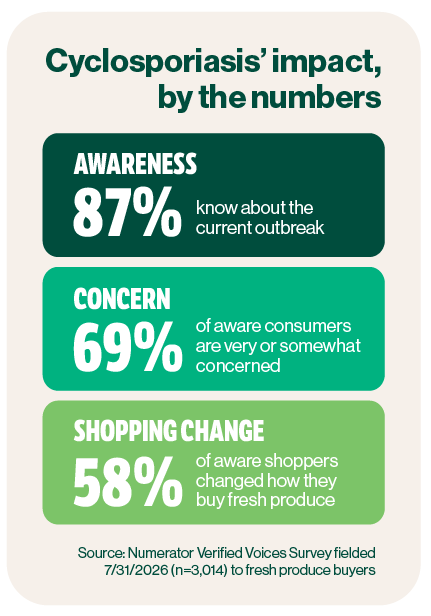
Data from research firm Numerator captured the outbreak’s broad effect on shopper confidence. In July, when the cyclosporiasis outbreak was at its peak, nearly nine in 10 produce shoppers — 87% — said they were aware of the outbreak. Among those aware, 69% were concerned and 58% changed how they bought fresh produce.
“The recent outbreaks reinforce something retailers already know: food safety and consumer confidence are fundamental to the category,” said Roerink. “One outbreak can create concern well beyond the specific product involved because consumers don’t always distinguish between commodities, growing methods or geographic origins.”
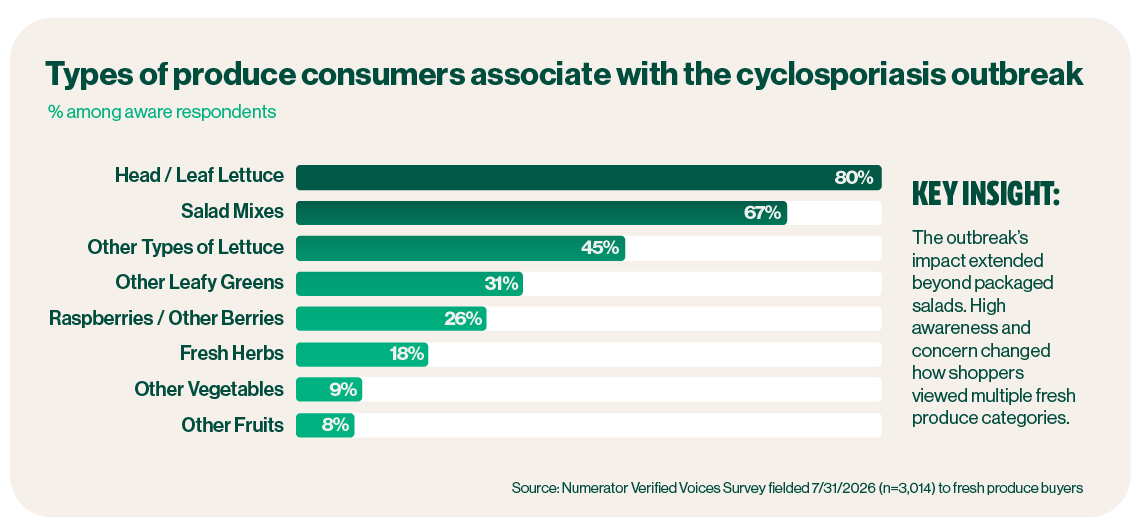
In addition to growing more anxious about food safety, consumers have also been much more cautious in their spending, Roerink said. Meanwhile, the food industry has also struggled with weather volatility, supply disruptions, labor shortages and transportation issues. She also noted the produce industry’s ongoing challenge of encouraging consumers to eat more fruits and vegetables.
Despite those pressures, greenhouse-grown produce has continued to show resilience. Rachel Tuszynski, senior director of sales strategy at Cox Farms, found a clear relationship between greenhouse-grown produce offerings and category performance in her analysis of the latest NielsenIQ data. Before the outbreak, retailers with below-average greenhouse offerings saw year-over-year category declines, while those at the national average remained roughly flat. Performance generally improved as greenhouse offerings increased.
The trend continued after the outbreak. While packaged salad sales declined across all retailer groups, those with a stronger greenhouse presence experienced smaller declines than their peers. The findings suggest that greenhouse-grown produce may have inspired greater consumer confidence during the disruption, helping retailers better withstand the downturn.
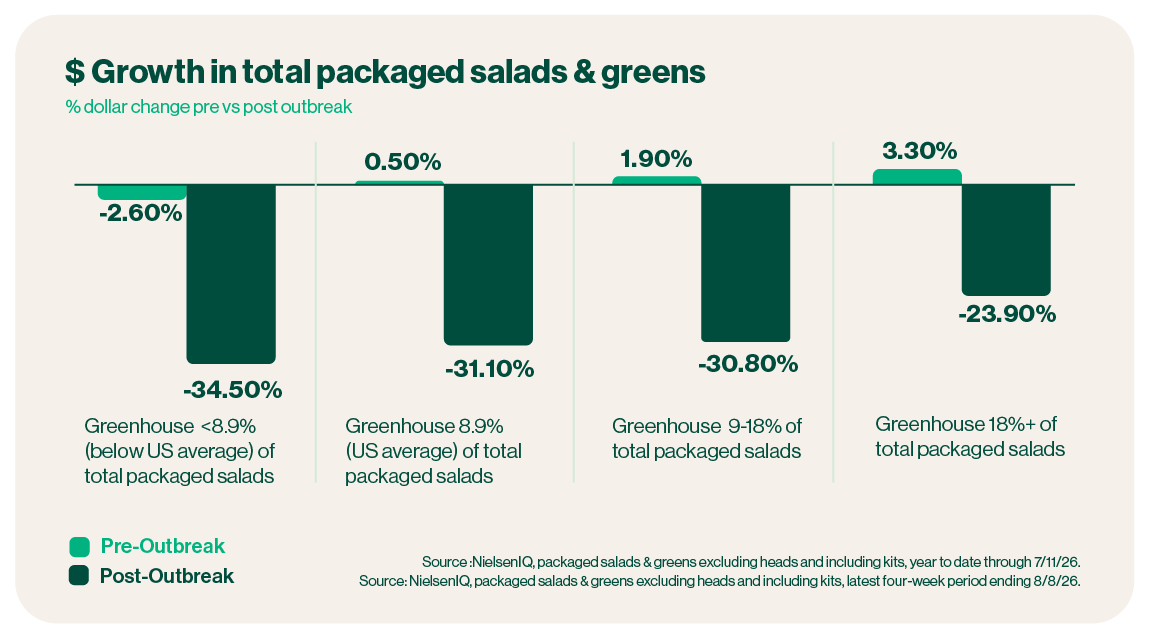
The data also points to a gap between where growth is happening and how shelf space is allocated today. Greenhouse products account for less than 9% of packaged salad sales, yet delivered all of the category’s growth in the past year. As greenhouse-grown products continue to gain share across produce categories, retailers have an opportunity to revisit assortment, space allocation and merchandising to ensure they’re investing in the segments driving growth.
Consumer familiarity leaves room for growth
Even as greenhouse-grown products gain momentum in the produce aisle, many consumers remain unfamiliar with the category and why growing methods matter.
A Cox Farms study conducted by research firm Morning Consult shows a substantial familiarity gap between consumers and industry professionals, including retailers, distributors and others in food-adjacent fields such as media and academia. Only 59% of consumers reported being at least somewhat familiar with greenhouse-grown produce, compared with 98% of industry respondents surveyed; though even with that gap, both audiences associated greenhouse-grown produce with freshness and quality.
Consumers’ relative lack of awareness about greenhouse-grown produce also extended to their perceptions about individual brands. Consumers generally could not identify whether a produce brand uses greenhouses or traditional field-growing methods.
That lack of awareness was also reflected in their shopping patterns: The most common answer shoppers gave for not purchasing greenhouse produce? “No particular reason.”
The findings point to the need for clearer consumer education, which Roerink agreed could be key to boosting sales of greenhouse-grown produce.
“Few consumers specifically shop for ‘greenhouse-grown,’” Roerink said. “They shop for produce that looks good, tastes good, is available, is worth the price and makes them feel confident about what they’re buying. Greenhouse growers and retailers will be most successful when they translate the production story into those tangible shopper benefits.”
Turning shopper awareness into sales growth
Roerink said growers and retailers have an opportunity to work together to better connect greenhouse growing practices with consumer priorities. Suggestions include:
- Making greenhouse agriculture easier to understand
In retail settings, use simple, consumer-ready messaging that clearly explains why greenhouse growing matters, supported by signage, digital content, social assets and recipe inspiration. - Leading with shopper benefits
Define greenhouse growing in terms of consumers value, such as freshness, consistent quality, year-round availability, local production, sustainability and food safety. “The key is to sell the benefits, not the technology itself,” Roerink said. - Building confidence through consistency
Education may encourage trial, but repeat purchases depend on delivering a great eating experience. Consistent taste, texture, appearance and shelf life ultimately create lasting consumer confidence and loyalty.
“Shoppers are watching what they spend, but value isn’t only about price,” said Jessica Soare, assistant vice president of marketing at Cox Farms. “Consistent quality, longer shelf life and year-round availability mean less waste at home and in store, and a product that meets expectations every time. That’s what drives repeat purchase and category performance.”
What will shape the next phase of greenhouse growth?
The next phase of greenhouse agriculture will depend not only on added capacity, but also on the industry’s ability to scale efficiently, deliver dependable service and create sustainable economics for growers and retailers. Three factors will matter most:
- Consumer trust: education that connects growing practices to food safety, quality and taste
- Category productivity: assortment and space aligned with where demand is growing
- Supply reliability: consistent, year-round supply amid trade, labor and input-cost pressures
For retailers, the opportunity isn’t simply to sell more greenhouse-grown produce. It’s to use greenhouse agriculture to improve assortment strategies, strengthen shopper confidence and drive long-term category growth.
Ready to reap the benefits of greenhouse-grown product?
Data Sources:
NielsenIQ data.
USDA Vegetables and Pulses Outlook, April 2026.
Numerator Verified Voices Survey fielded 7/31/2026 (n=3,014) to fresh produce buyers.
2026 Morning Consult proprietary quantitative study for Cox Farms (N = 3,093).